Islamic Development Bank Opens Mechanization Hub in Kano to Boost Farm Productivity

Amina Khalid Muhammad
The Islamic Development Bank (IsDB) on Tuesday commissioned an agricultural mechanization center in Kadawa, Garun Mallam local government area of Kano State, as part of efforts to modernize farming and strengthen food security in northern Nigeria.
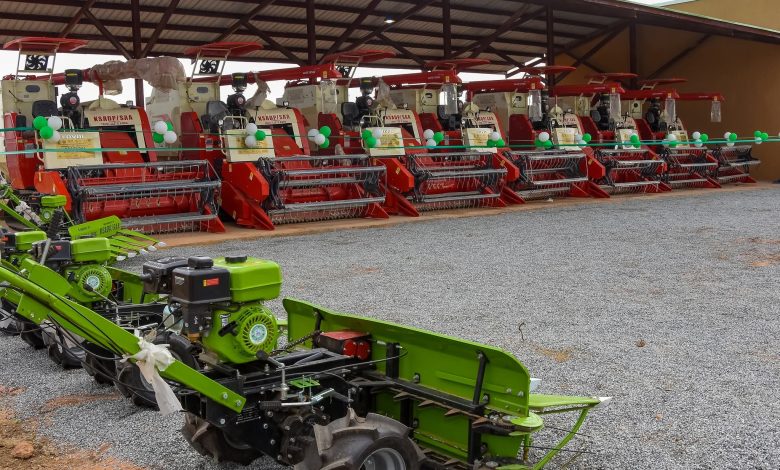
The facility, one of three mechanization hubs under the Kano State Agro-Pastoral Development Project (KSADP), is funded by the IsDB and the Lives and Livelihoods Fund (LLF). Its crop value chain component is implemented by Sasakawa Africa Association.
Equipped with tractors, power tillers, planters, harvesters and threshers, the hub is designed to reduce farm drudgery, cut production costs and limit post-harvest losses. Operators and technicians have been trained to run the equipment under a sustainable service-provider model.
“This is a collective success story that will serve the people of Kano State and surrounding regions for years to come,” said Dr. Rami Ahmad, IsDB Vice President (Operations), at the commissioning.
He added, “From crop production to irrigation, value addition, processing and livestock productivity enhancement to climate-resilient initiatives, the benefits of this project will crystallize over time.”
The project, Ahmad said, aligns with IsDB’s agricultural policy, which focuses on sustainable, resilient and equitable rural development in member states. He expressed confidence that the Kano State government and private sector actors would sustain and expand the initiative beyond donor support.
Farmers welcomed the project, citing tangible benefits. “Because of the mechanization support we received, members of our cooperative generated over 21 million naira, with 20 million saved in our account and 1.3 million disbursed to members for seeds and other inputs,” said Sagir Abubakar, a farmer from Chiromawa community.
KSADP Communication Specialist Ameen Kabeer Yassar said the project demonstrates how agricultural modernization can directly uplift rural livelihoods and reduce poverty.