Mu’azu Malami Mabera
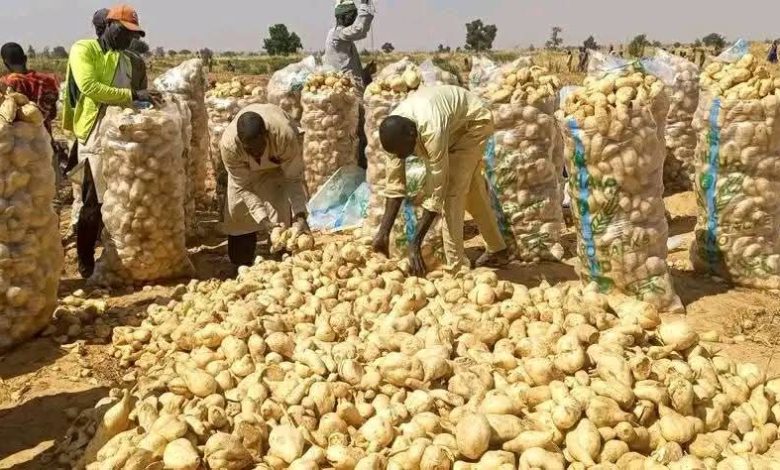
As prices of staple grains like rice, maize, and guinea corn soar beyond the reach of many Nigerians, households are beginning to shift their diets toward cheaper alternatives like potatoes. In northern states such as Sokoto, this change is already being felt in local markets.
Jibrin Aminu, who has been selling potatoes in Sokoto for years, told *Farmers Voice NG* that the current economic situation has pushed many people to abandon costlier food items in favor of more affordable ones. “People are now buying potatoes more than ever before,” he said, seated beside his display of fresh produce at the market.
The ongoing rise in food prices has been widely reported across the country, with many families struggling to feed themselves. For traders like Jibrin, this shift in buying habits means more business—but not without its own complications.
“Compared to past seasons, we are making more sales because many customers cannot afford the high prices of rice and other grains,” he explained. Potatoes, once a supplementary food item, are now becoming a main meal option for many in the region.
But even as demand grows, the hot season in Sokoto has introduced new difficulties for sellers trying to preserve the quality of their stock. “This heat is a big problem,” Jibrin said. “It affects the freshness of the potatoes. They spoil faster, and if you don’t sell them quickly, you end up losing money.”
He added that many traders like him are forced to either lower their prices to offload stock quickly or suffer the losses from rotten produce. “You can’t store them for long like before. Once they start to spoil, buyers complain, and no one wants to spend their money on bad potatoes.”
Customers are also noticing the shift. A shopper at the market, Aisha Lawal, said she turned to potatoes out of necessity. “I used to cook rice for my family, but now it’s too expensive. Potatoes are cheaper and still fill the stomach,” she said while haggling with another vendor.
The growing reliance on potatoes as a substitute for grains is not unique to Sokoto, but the heat adds a layer of pressure that affects sellers and buyers alike. The lack of cold storage facilities in many markets only makes the situation worse.
Some vendors try to cover their potatoes with wet sacks or sell only in the early mornings to avoid heat damage, but these methods offer limited help. “We need better ways to store them,” Jibrin said. “Or else all this demand will not benefit us in the long run.”
Despite these issues, sellers like Jibrin remain on the front lines of a changing food system—one shaped not just by market prices, but by the daily choices of struggling families. “People will keep coming as long as rice and maize remain out of reach,” he noted. “But for how long can we keep up with the spoilage?”