Jigawa, Bauchi Enrol 100,000 Farmers on Digital Agric Platform, Support 50,000 Others

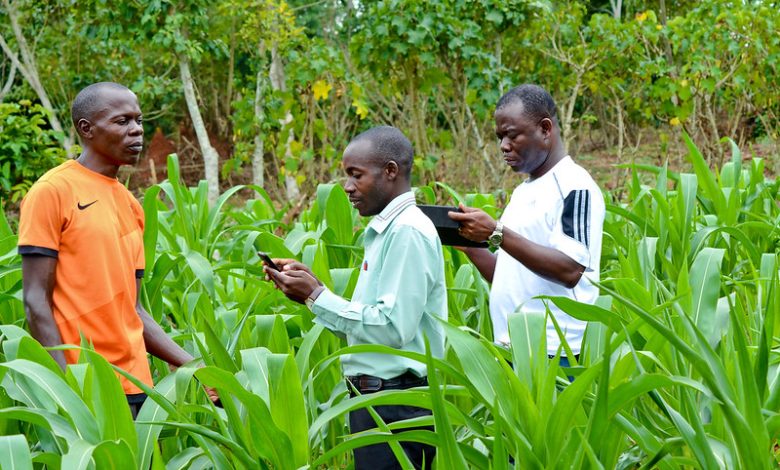
The Jigawa government says it has enrolled 100,000 farmers into a digital platform to foster smart agriculture in the state.
The farmers have been enrolled into the Digital Wallet, GIS-Based Farm Mapping, and the AI-Driven Pest Advisory System.
Mr. Sagir Musa, Commissioner for Information, Youth and Sports, stated this in Dutse while presenting the scorecard of Governor Umar Namadi’s administration over the last two years.
He said the state government targeted the enrolment of 100,000 farmers by 2025, compared to 20,000 in 2023.
Musa noted that the administration recorded about 75 percent success in fostering digital agriculture to fast-track sustainable development in the sector.
The commissioner said the government distributed fertilizers, seeds, and other inputs to 85,000 farmers to encourage crop production in the state.
“On improved seed distribution, we met a baseline of 500 in 2023. We set a target of 1,200 for 2025 and have already achieved 950, representing about 79 percent success in this area.
“The administration recorded a 22 percent increase in crop yields, despite a target of 30 percent and a baseline of 10 percent. This was due to the impact of drought.
“The key programmes responsible for this achievement include the Wheat and Rice Revolution Initiative, Crop Cluster Farm Scheme, and Fadama III Additional Financing,” he said.
Musa added that the state also recorded a significant achievement in AI adoption for cattle breeding, covering 12,500 of the 15,000 targeted animals.
On animal husbandry, he said about 4,200 of the targeted 5,000 farmers had received training in modern poultry farming, while milk production increased to 100,000 litres per day, up from 80,000 litres.
This feat, he said, was due to the establishment of dairy hubs, a cattle breeding and genetic improvement scheme, backyard poultry empowerment, and the pastoral resettlement programme.
Similarly, the Namadi administration opened up 3,800 hectares for irrigation activities, compared to 1,200 in 2023.
“As far as rural road construction is concerned, the state achieved about 80 percent, completing 120 kilometres against the target of 150 and a baseline of 50 in 2023.”
According to Musa, the Hadejia River Valley is being expanded with the provision of solar-powered water pumps, access roads, and agricultural marketing infrastructure.
He said the administration had inoculated 450,000 out of a targeted 500,000 animals, completed upgrades of 10 veterinary clinics, and adopted practical measures to address delays in procurement to enhance surveillance during outbreaks.
“We achieved vaccination coverage of 85 percent of the targeted animals through a mass livestock vaccination campaign.
“The government also introduced mobile veterinary clinics and a zoonosis control programme to enhance the quality of animal healthcare services at the grassroots,” Musa said.
He further noted that the administration had distributed 150 tractors to farmers and trained technicians to encourage farm mechanisation and boost productivity.
Additionally, 3,800 fish farmers were supported to produce over 11,000 tonnes of fish in the past two years.
“The key programmes include the Aquaculture Entrepreneurship Scheme, Typha Grass Clearance and Utilisation, and Fish Processing and Cold Chain Development.
“The administration achieved 88 percent success in providing fertiliser subsidies to 220,000 beneficiaries, against a target of 250,000 and a baseline of 100,000 in 2023.
“About 1,300 agro-dealers were trained, compared to a target of 1,500 and a baseline of 500 in 2023. This represents 87 percent achievement,” the commissioner said.
He noted that the state recorded rapid agricultural transformation through the establishment of six seed multiplication farms, the introduction of the E-voucher input distribution system, and the upgrade of the fertiliser blending plant.
In Bauchi State, the government has supported 50,000 farmers in dry-season activities under its Bauchi Agricultural Renewal Initiative (BARI) over the past year.
Mr. Ahmed Audu, Director of Agriculture at the Bauchi State Ministry of Agriculture and Livestock Development, said the benefiting farmers received improved seeds, fertilisers, and other inputs.
He said the farmers were also trained in climate-smart agriculture and Good Agricultural Practices (GAP) to encourage productivity.
“Governor Bala Mohammed’s administration has reclaimed and cultivated 15,000 hectares of arable land with mechanised support, resulting in a 38 percent increase in maize and rice yields compared to 2024.
“Five large-scale irrigation projects have been commissioned along the Jama’are and Komadugu River Basins, enhancing dry-season farming and ensuring year-round food production,” he said.
To strengthen agro-processing and preservation, Audu said the state has constructed three modern agro-processing centres in Zaki, Dass, and Ganjuwa, while 10 silos have been upgraded to reduce post-harvest losses.
Also, Hamisu Ahmed, an official of the Ministry of Works and Housing, said the Bala Mohammed administration had constructed over 780 kilometres of roads to connect farming communities with markets and improve access to social services.
“Ten new bridges were built in flood-prone areas, including the Gadau Bridge, restoring critical connectivity and boosting local trade,” Ahmed said.
According to Livinos Boi, an agricultural economist, Bauchi State is gradually reclaiming its agricultural potential under Mohammed’s leadership.
“Farmers are receiving more support now than under previous administrations,” he said.
However, Mrs. Fatima Danladi, a social activist, argued that the dividends of democracy are not being evenly distributed across the state.
According to her, many rural farmers still lack access to government interventions due to bureaucracy and personal interests.
On infrastructure, Mr. Ibrahim Musa, a civil engineer, described infrastructural development as “a critical step in modernising Bauchi State’s economy.”
“The volume of construction activity is unprecedented in the recent history of Bauchi State.
“Yet, while the roads are welcome, we must ask whether due process was followed in awarding the contracts.
“We need accountability to ensure long-term value,” he said.