Sadiya Ahmad Musa
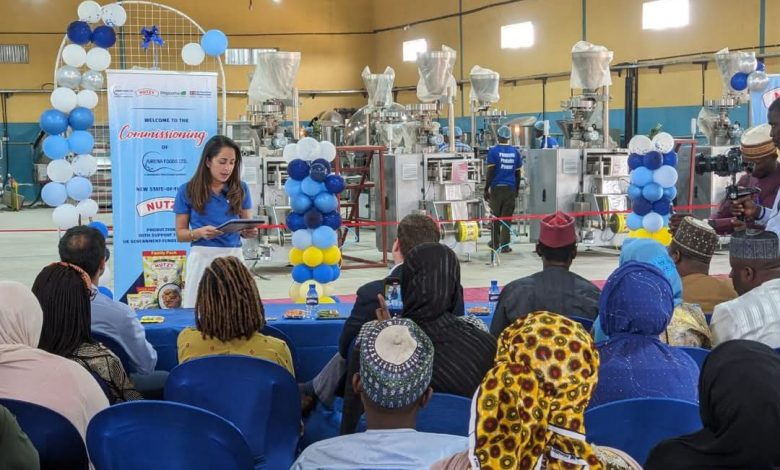
A new peanut snack processing factory has been commissioned in Kano State, contributing to efforts to boost agro-industrial activity in northern Nigeria.
The factory was established with support from the Foreign, Commonwealth & Development Office (FCDO) under its Propcom+ Smart Agriculture and Climate Programme, which is intended to support local food processing and improve the livelihoods of farmers.
At the commissioning, Alhaji Aminu Iliyasu, the State Coordinator for the Special Agro-industrial Processing Zones (SAPZ) and representative of the Kano State Ministry of Agriculture, acknowledged the role of the FCDO in supporting agricultural initiatives in the state.
“This factory aligns with our vision through the SAPZ programme, which seeks to attract private sector players into food processing hubs,” Iliyasu said. “Kano State, under the leadership of Governor Abba Kabir Yusuf, is actively working to revive its agro-industrial base.”
He said the government is focused on encouraging private sector participation, creating jobs, and reducing dependence on food imports. “Initiatives like this boost the quality of agricultural outcomes and promote industrialisation,” he added.
Dr. Adiya Ode, Team Lead of Propcom+, said the factory was co-financed as part of efforts to support the agricultural value chain. “Through our collaboration, we co-financed this factory and strengthened the supply chain from smallholder farmers to the market. It’s a shared success,” she said.
She added that the factory addresses key challenges in the peanut sector. “The facility also tackles aflatoxin contamination—a major barrier in Nigeria’s peanut sector—while providing nutrition and jobs,” she noted. “We believe this commissioning will boost farmers’ incomes, enhance agricultural practices, and increase access to affordable, nutritious peanut-based products that help reduce malnutrition.”
Ajay Ramnani, Executive Director of Ajrena Foods, the company managing the factory, said the project was the result of a long-standing goal.
“This facility is not just a factory; it is the realisation of a vision we began over a decade ago—to process Nigerian peanuts to global standards and bring back the era of groundnut pyramids,” Ramnani said.
He said the company has connected its operations with more than 1,000 trained smallholder farmers, mostly women and youth. “We have been able to build, equip, and link our production directly to over 1,000 trained smallholder farmers, mostly women and youth,” he revealed.