Hauwa Sani
A coalition of stakeholders from Nigeria’s agricultural sector has called for a major overhaul in how the country funds and implements its agricultural policies.
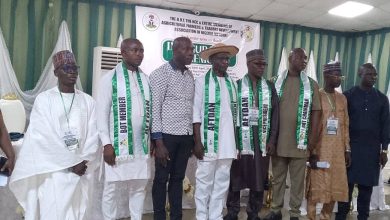
This demand followed a three-day National Stakeholders Consultative Meeting on the 2026 Agriculture Budget held in Lagos.
More than 130 participants attended, including representatives from government ministries, civil society groups, donor organisations, academia, and farmers’ associations.
The meeting was organised by ActionAid Nigeria, the Federal Ministry of Agriculture and Food Security, the Ministry of Budget and Economic Planning, GIZ’s AgSys Nigeria, and the ECOWAS Commission. It came amid growing hunger, declining productivity, and insecurity that continues to displace farmers and disrupt food supply chains.
As the 2026 agriculture budget cycle draws closer, participants said the country’s agricultural spending must align with frameworks like the National Agricultural Technology and Innovation Policy (NATIP), the Kampala Declaration on food systems, and the African Union’s Malabo Declaration.
A communique issued at the end of the meeting stated: “Despite our immense agricultural potential, the country is increasingly dependent on food imports while our farmers struggle to access land, credit, seeds, and safety.”
The statement noted that government investment in agriculture has dropped sharply—from 4.2 per cent of the national budget in 2024 to 1.2 per cent in 2025—well below the 10 per cent commitment under the 2003 Maputo and 2014 Malabo Declarations.
“What we need is more than a budget—what we need is political will, accountability, and urgency,” it read.
Participants described worsening farming conditions across the country, saying more than 30 million people in 26 states and the FCT are expected to face acute food and nutrition insecurity during the current lean season.
They listed several challenges including rising input prices, floods that submerged over 1.1 million hectares of farmland in 2024, poor soil health, and high post-harvest losses. Insecurity, including terrorism and farmer-herder violence, was also identified as a major factor disrupting farming.
Participants said structural inequality continues to affect the sector. While women and youth are actively involved in farming, they are often excluded from access to credit, land, and decision-making processes.
Referring to the National Agricultural Gender Policy, which recommends that women receive at least 35 per cent of agriculture funding, the forum stated: “That target remains a paper promise with little to show in actual implementation.”
Customary land practices, according to the forum, prevent women, youth, and persons with disabilities from securing land rights, limiting their ability to grow their businesses or qualify for loans. “Inputs often arrive too late or are distributed through opaque channels,” participants noted.
To address these issues, the meeting called on the presidency to prioritise agriculture. Participants recommended allocating at least 10 per cent of the national budget to agriculture, and ensuring timely release of funds in line with planting seasons.
The group also pushed for decentralised agricultural security, more rural infrastructure such as cold storage and roads, and digital systems to track spending.
“Inclusion must not be a slogan,” the statement said. “At least 35 per cent of agriculture funding should be ring-fenced for women, youth, and PWDs—with dedicated lines and clear oversight.”
Suggestions to resolve farmer-herder conflicts included developing hybrid pasture farms. They also recommended youth-targeted projects like agri-tech hubs and farm clusters to bring more young people into agriculture.
The National Agricultural Development Fund was asked to increase its role in financing and monitoring the sector, with a call to redirect unused government capital into agriculture.
The meeting ended with a warning: failure to act swiftly will push more people into hunger and poverty. But with proper reforms, “agriculture could yet transform the nation.”