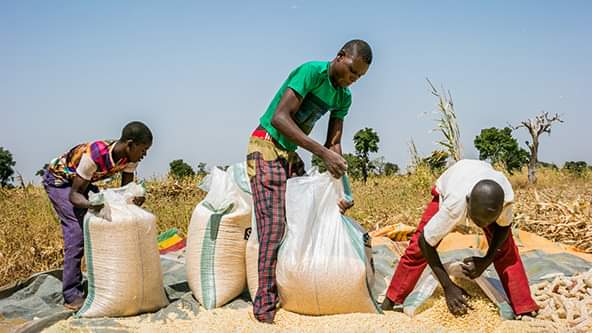
Nigeria loses about 50 percent of its agricultural products along the food supply chain, according to Ibrahim Ishaka, a Food System and Nutrition Specialist with the Food and Agriculture Organisation (FAO) of the United Nations.
Ishaka made this known during an interview with the News Agency of Nigeria (NAN) on the sidelines of an FAO-organized training in Yola on Saturday.
He highlighted that food waste poses a significant challenge to Nigeria’s agricultural sector, with far-reaching consequences for food security, economic development, and environmental sustainability.
“Some of these challenges include technological barriers, inefficient harvesting techniques, pest infestations, and lack of access to modern farming tools, all of which contribute to losses during harvest, largely influenced by consumer behavior,” Ishaka stated.
He also pointed out other contributors to post-harvest losses, such as inadequate storage facilities, poor handling practices, and insufficient transportation infrastructure, which are especially detrimental to perishable goods like fruits and vegetables.
“These factors result in significant losses, especially for perishable goods such as fruits and vegetables,” he noted. He further added that inefficient food processing methods, improper packaging, inadequate storage, and unhealthy consumption habits exacerbate the food waste crisis.
In addressing these challenges, Ishaka outlined several FAO initiatives aimed at promoting nutritious and sustainable food practices within local communities. “These initiatives include investing in post-harvest infrastructure, building community capacity, training, and empowerment programmes, among others,” he explained.
Emphasizing the importance of education, Ishaka said: “I firmly believe that the key to empowering people, particularly in the north-east region, lies in giving them the power to make informed decisions and the power to educate others.”
Ishaka also mentioned the establishment of FAO-supported centres that produce and distribute locally nutritious foods, such as ‘tom brown,’ as part of efforts to combat malnutrition and food insecurity in the region. “These centres are run by local communities, promoting community-led initiatives to improve food security,” he added.
He expressed optimism that the FAO training programme would have a lasting impact on participants and their communities by enhancing overall well-being and food security through the adoption of best nutrition practices.
The News Agency of Nigeria (NAN) reports that the FAO’s training is part of the “Emergency Agriculture-Based Livelihoods Sustenance for Improved Food Security” programme, which targets the states of Borno, Adamawa, and Yobe, with support from USAID.