By Zulaiha Sani Haruna
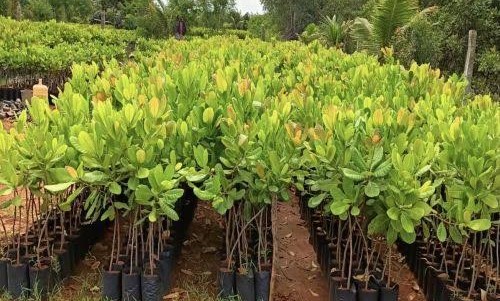
The National Cashew Association of Nigeria (NCAN) says it has produced over 120,000 cashew seedlings, with plans to raise the number to 300,000 for distribution to farmers across the country.
The seedlings, according to NCAN President Dr. Ojo Ajanaku, are of the popular natural variety known as the Ogbomosho or Oyo type — a cultivar known for its early maturity and international demand.
“This is a uniform variety farmers will be cultivating,” Ajanaku said. “By the third year, it matures into a full-grown tree and starts fruiting — and this particular variety is globally sought after by processors and exporters due to its high value.”
The seedlings are being raised in nurseries across seven states: Benue (20,000), Kogi (20,000), Edo (40,000), Kwara (20,000), Oyo (30,000), and Enugu (50,000).
NCAN also received 45,000 seedlings from the Beyond Farming Collective, an external partner supporting the effort.
“So far, we’ve produced 120,000 seedlings, and our target is 300,000,” Ajanaku said.
He made it clear that the association has not received any government or donor funding.
The project, he said, is being financed through NCAN’s internal ticketing system, which collects modest fees from members transporting cashew to processors or export points.
“We pooled those funds to support the nursery production. That way, we can give something tangible back to our farmers,” he said.
Ajanaku believes Nigeria can drastically improve its annual cashew output with the right push.
“With determination, we can push our annual production to 2 million metric tonnes,” he said. “That would drastically increase Nigeria’s foreign exchange earnings, especially since cashew is predominantly for export and not widely consumed locally due to competition with groundnuts.”
He said NCAN had reached out to government agencies such as the National Agricultural Development Fund (NADF), National Agricultural Land Development Authority (NALDA), and the National Agricultural Seed Council (NASC) for collaboration — but has yet to receive any response.
“We’ve written to them, hoping to present our plans and achievements, but no agency has responded so far,” he said. “We’re using this medium to urge them to give us a chance to show how they can assist us.”
He also pointed out that expanding cashew farming could help tackle insecurity and unemployment.
“We have so much unused land — over 54 million hectares in Nigeria. If we convert our forests into farmlands, we’ll reduce criminal hideouts and create jobs. Cashew is a perfect crop to help us do that,” Ajanaku said.