Muhammad Shamsuddeen Abubakar
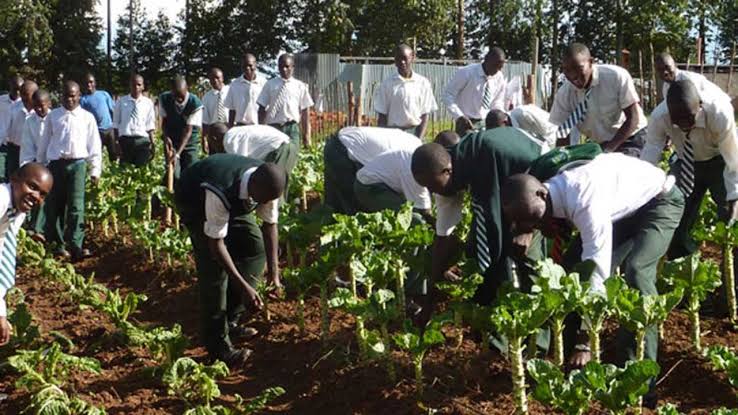
The Minister of State for Education, Professor Suwaiba Sa’id Ahmad, has launched the federal government’s ‘Grow What You Eat’ initiative aimed at introducing farming in senior secondary schools across the country.
The programme, which began on Thursday in Abuja, was organised by the National Senior Secondary Education Commission (NSSEC).
Professor Ahmad, represented by Kehinde Osinaike, Deputy Director in the Science and Technology Department of the ministry, said the programme is intended to promote practical agricultural education through school-based farming.
“Today’s event marks the beginning of a new era, where school farming is repositioned as a tool for experimental learning, economic empowerment and sustainable development. By integrating classroom knowledge with hands-on practice, we are not only preparing our students for examination but also for life,” she said.
“The ‘grow what you eat’ initiative is not just about farming. It is about cultivating a mindset of self-reliance, innovation, and responsibility among our young people. It is about reconnecting our students to the land and showing them that agriculture is not a punishment but a pathway to prosperity.”
She acknowledged the role of the National Senior Secondary Education Commission (NSSEC) in initiating the programme, and also thanked the management and staff of Government Girls Secondary School, Abuja, for hosting the event.
The Executive Director of NSSEC, Dr Iyela Ajayi, said the pilot phase of the programme will involve 20 senior secondary schools across the six geopolitical zones, to be nominated by Commissioners of Education from selected states.
Dr Ajayi stated that “‘Grow what you eat’ is not just a school project; it is a national intervention. It is a vision of transforming school farms into hubs of agricultural learning, enterprise development and community service. By engaging our students in structured agricultural activities, we aim to cultivate not just crops but also discipline, entrepreneurship, responsibility and resilience.”
To support the initiative, Ajayi said the commission has trained desk officers, developed implementation guidelines, provided initial seed grants, created a monitoring framework, and opened discussions with relevant ministries, departments, agencies, and technical partners.
“This is not just about growing food, it is about growing futures. It is about raising a generation that will not only be literate but also productive, self-reliant and solution-oriented,” he added.
Mohammed Salihu, Head of Teacher Development and International Partnership at NSSEC, said the commission has provided small seed funds to selected schools to begin the initiative. He added that there are plans to expand the programme to all senior secondary schools in the country in partnership with relevant stakeholders.