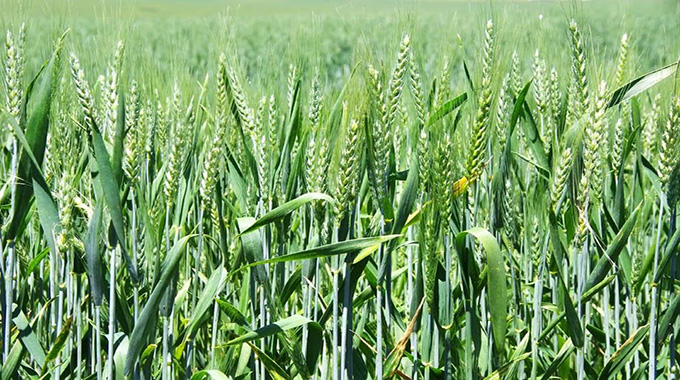
Over 13,000 wheat farmers in Kebbi State are poised to benefit from the Nigeria Agricultural Gross Enhancement Scheme (NAGAP) during this year’s dry farming season.
Dr. Ari Muhammad Abdulaziz, Kebbi State Coordinator for the Federal Ministry of Agriculture and Food Security, disclosed that the scheme will assist farmers across 12 local government areas in the state.
He explained that the initiative is part of the government’s broader efforts to combat food insecurity by providing essential farming inputs.
“The program runs year-round, covering both wet and dry farming seasons,” Dr. Abdulaziz stated. He noted that while the wet season program has ended, the first phase of the dry season farming has now commenced.
Addressing concerns over fee structures, Dr. Abdulaziz clarified that the cost is shared equally between the federal government and the farmers. “Farmers contribute 50% of the cost of their packages, while the federal government covers the other 50%,” he explained.
He also detailed the revised delivery and payment structure under the program. Farmers paying ₦74,000 are entitled to three bags of fertilizer, whereas those contributing ₦111,000 receive three bags of fertilizer along with 50 kilograms of wheat seed.
Chairman of the Rice Farmers Association of Nigeria (RIFAN) in Kebbi State, Yusuf Gabi Argungu, praised the program for its timely implementation, aligning well with the wheat planting season.
“This initiative is a significant boost to food security,” he said, urging the government to increase subsidies on farming equipment.
Argungu also encouraged wheat farmers to take advantage of the scheme for early planting, which he said would result in better yields.
Earlier this year, the Minister of Agriculture and Food Security, Abubakar Kyari, revealed that an estimated ₦309 billion was injected into the Nigerian economy through last year’s harvest.
He highlighted the administration’s efforts to ensure food and nutrition security, including the launch of dry season farming covering 118,657 hectares of wheat across 15 states.