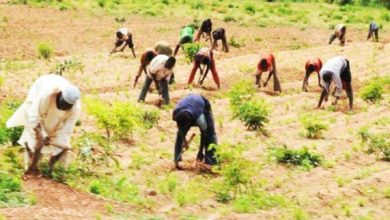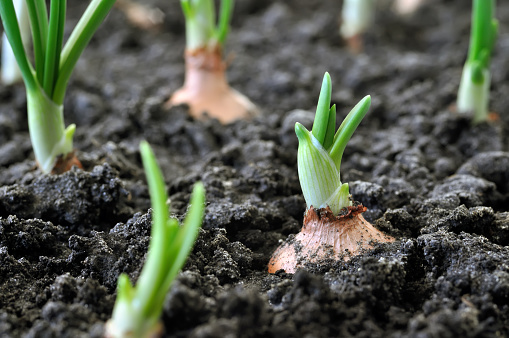
The Nigerian Export Promotion Council (NEPC) has advised farmers in Adamawa to adopt organic farming methods in order to make Nigeria competitive in the global export market for organic foods.
Mrs. Nonye Ayeni, Executive Director/Chief Executive Officer of NEPC, made the call on Monday in Yola during a one-day training on organic agriculture and certification.
The training, themed “Building Capacity for a Thriving Organic Export Sector in Nigeria,”.targeted smallholder farmers and processors across the state.
Ayeni, who was represented by the NEPC North-East Regional Coordinator, Mr. Ben Egon, said the initiative is part of the Council’s broader strategy to unlock the export potential of Nigeria’s organic agriculture sector.
She said the Council is focused on building the capacity of farmers to acquire the Participatory Guarantee System (PGS) certification, which is crucial for meeting international organic standards.
According to her, PGS is a locally focused certification system that promotes trust, quality, and direct involvement of farmers in the certification process.
Ayeni noted that the global organic food industry, once considered a niche, has grown into a $97 billion sector and is projected to reach $437 billion by 2028.
“In today’s world, the demand for organic food items is no longer a niche—it is a global business driven by growing consumer awareness of health and food safety concerns,” she said.
“The market opportunity is currently valued at $97 billion globally and is estimated to reach $437 billion by 2028.
“For Nigeria, this presents not just an opportunity but a responsibility to tap into this global market,” she added.
She emphasized that organic and agro-ecological practices provide a sustainable and profitable alternative, but must be supported by strong certification frameworks and clear government policy.
Ayeni reaffirmed the Federal Government’s commitment to economic diversification through non-oil exports, identifying organic farming as a key contributor to that agenda.
As part of NEPC’s farm input support program, she announced the donation of 300kg of improved, high-yield SAMNUT 22 groundnut seeds to the Groundnut Farmers, Processors, and Marketers Association of Nigeria, Adamawa Chapter.
She said the seeds would be planted on an eight-hectare demonstration farm in Malkohi, Yola South LGA, with plans to expand support to other clusters across the state.
Also speaking, Prof. David Jatau, Adamawa State Commissioner for Agriculture, said the state government fully supports the shift to organic farming.
Represented by Mr. Peter Irimiya, Deputy Director in the Ministry of Agriculture and Rural Development, Jatau said smallholder farmers in the state are eager to explore export opportunities.
“We believe this is the way forward for our farmers, especially at the grassroots, to begin exporting beyond the state and across Nigeria’s borders,” Jatau said.
A participant, Malam Ismail Alhasan, expressed appreciation to NEPC and described the training as a transformative initiative.
“We are grateful for the 300kg of groundnut seeds. We are ready to start organic farming in Adamawa,” he said.