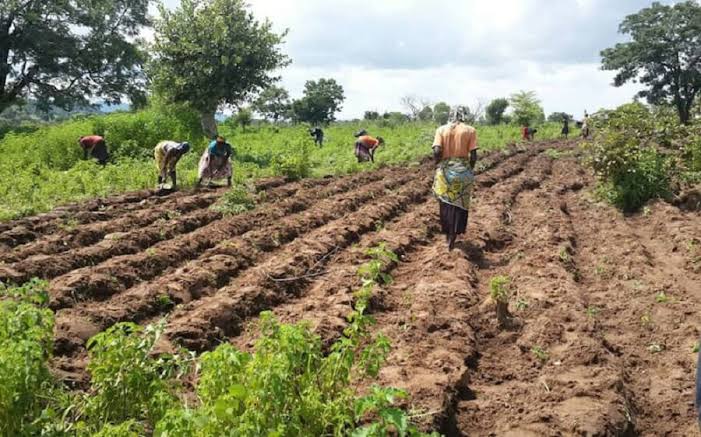
The Federal Government-backed Kano State Special Agro-Industrial Processing Zone (SAPZ) project has announced plans to support around 750,000 women involved in agriculture. The beneficiaries include small-scale farmers, food processors, aggregators, and service providers working within Agro-Industrial Hubs (AIHs) and Agricultural Transformation Centres (ATCs). Overall, the program is expected to reach about 1.5 million households in its first phase.
The project is focused on eight Local Government Areas (LGAs): Dawakin Kudu, Kumbotso, Tofa, Gwarzo, Madobi, Shanono, Minjibir, and Gabasawa. These areas were selected following a pilot program in Kura and Bagwai LGAs, where 1,000 farmers—500 tomato growers and 500 rice farmers—were supported.
SAPZ Project Coordinator, Aminu Abdullahi Iliyasu, disclosed this during a community awareness campaign held in the newly included LGAs.
“This initiative aims to inform and mobilize smallholder farmers, agro-processors, traders, and community-based service providers about the program’s objectives and benefits,” Iliyasu said.
The SAPZ initiative is being implemented in seven states—Kano, Imo, Kaduna, Cross River, Kwara, Oyo, and Ogun—as well as the Federal Capital Territory (FCT). The program is a collaboration between the Federal Government, African Development Bank (AfDB), International Fund for Agricultural Development (IFAD), Islamic Development Bank (IsDB), state governments, and private investors.
According to Iliyasu, “SAPZ is a comprehensive agro-industrialization initiative designed to boost private-sector investment in value-added agro-processing.
The program seeks to enhance food security, create jobs, promote import substitution, reduce rural poverty, and increase agriculture’s contribution to Nigeria’s GDP.
“It supports the development of high-food-production areas to supply the domestic market and generate exportable surpluses while empowering smallholder farmers, agro-processors, and traders, particularly women and youth.
“SAPZ operates on a market-driven model, ensuring sustainability through a robust value-chain approach that integrates government institutions, farmer organizations, and private-sector stakeholders.”