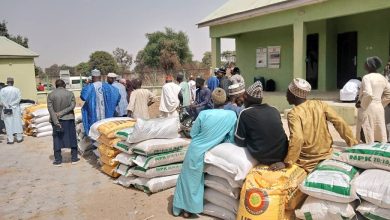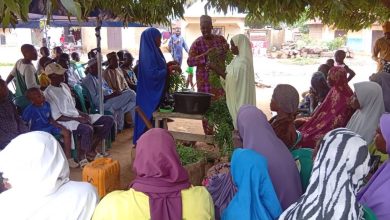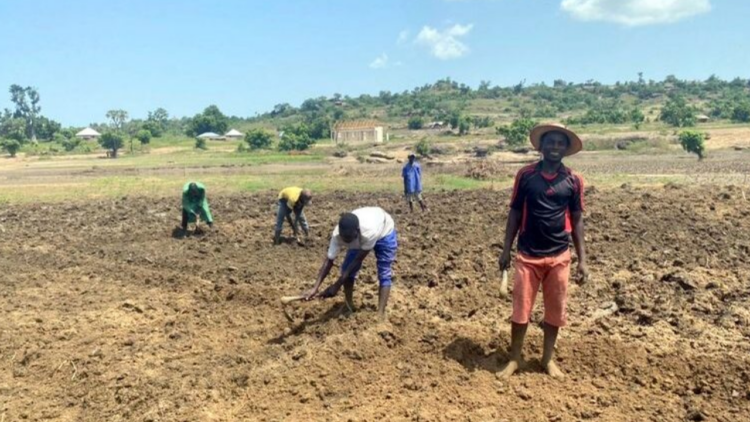
Governor Abba Yusuf of Kano State has expressed concern over the challenges facing the agricultural sector, including low productivity and post-harvest losses, which he said are hindering the sector’s growth and potential.
The governor also highlighted limited market access and inadequate financial services as major obstacles negatively impacting agriculture in the state.
He made these remarks on Monday while declaring open a two-day biannual review meeting on the implementation of Food Systems Transformation Pathways in Nigeria for the Northwest and Northeast zones, held in Kano.
Represented by his Chief of Staff, Shehu Wada Sagagi, Yusuf described Kano as one of Nigeria’s leading agricultural hubs, emphasizing the critical role of farming in the state’s economy.
“Our farmers work tirelessly to ensure that we have enough food, and agriculture continues to provide livelihoods for more than 60 per cent of our people. Yet, we are fully aware that this sector faces many challenges which range from low productivity and post-harvest losses to limited market access and inadequate financial services.
“These issues not only affect the growth of our agricultural sector but also limit the potential of our farmers, particularly smallholders. This is why the National Food System Transformation Pathways Project is both timely and critical,” he said.
Yusuf noted that the project is designed to address key challenges, including capacity building on emerging farming techniques, improving market access, building resilience to climate risks, and enhancing food preparation methods.
“The National Food System Transformation Pathways is offering our farmers the tools they need to not only survive but to thrive in an increasingly challenging environment,” he added.
Speaking at the event, the Northwest Coordinator of the project, Hajiya Lauratu Ado Diso, emphasized the impact of insecurity on farming activities in the region. She noted that banditry, kidnapping, and insurgency have made farming nearly impossible in some areas, exacerbating malnutrition and hunger in the zones.
“Hence, these zones become the most vulnerable among all, in terms of malnutrition and hunger scale. Therefore, we must double our efforts in eradicating this menace. We must put all hands on deck to do whatever it takes to change this narrative or transform the negative situation into a positive one.
“This could only be possible through effective implementation of Food System Transformation Pathways in all farms and will only be achievable through collaboration and coordination,” Diso, who is also the Permanent Secretary of the Kano State Ministry of Budget and Planning, stated.