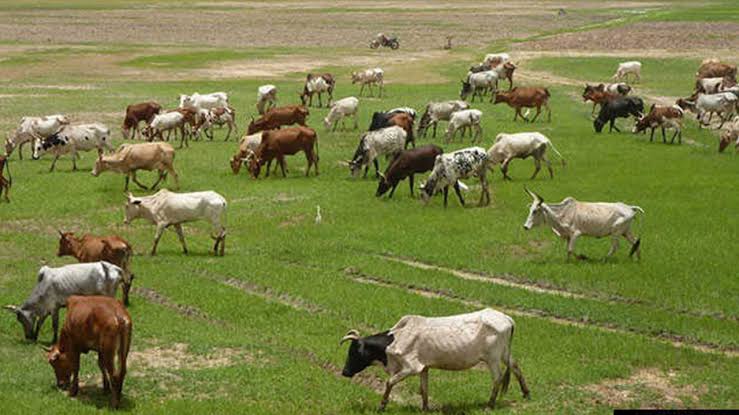
The Nigerian Export Promotion Council (NEPC) has said that Nigeria could earn over N150 billion annually from livestock exports, provided the country aligns with international livestock market standards.
The Executive Director of NEPC, Nonye Ayeni, made this known on Wednesday at the ongoing Value Chain Enhancement and Infrastructure Clinic for Effective Livestock Supply Chain and Innovative Market Orientation in Abuja.
The event was organized by the Livestock Productivity Enhancement and Resilience Support Project (L-PRES).
Represented by Mr. Macpherson Ileogben, Deputy Director of Product Development at NEPC, Ayeni emphasized the need to improve the livestock value chain to unlock the sector’s potential. He noted that the establishment of processing plants for meat, dairy, and hides is essential for maximizing value addition.
He emphasized a multi-pronged strategy involving research, infrastructure development, and policy reforms, while stressing the importance of cooperation between government institutions, private investors, and local communities.
Ayeni also said that implementing quality control measures and introducing a robust animal traceability system would be key to meeting export requirements.
Identifying Nigeria as one of Africa’s leading producers and exporters of leather, Ayeni noted increasing global demand, particularly in Europe, Asia, and North America.
“To expand our export capacity and meet international standards, stakeholders must address existing challenges in the sector collectively,” he said.
“Agriculture remains central to Nigeria’s economy, contributing roughly 25 percent to GDP and employing a large segment of the population. The livestock sub-sector plays a vital role in ensuring food security, creating jobs, and generating income through the production of meat, dairy, and leather,” he added.
Also speaking at the event, Mr. Aliyu Sheriff, Special Assistant to the President on Export Expansion (Office of the Vice President), acknowledged the livestock sector’s contribution to rural livelihoods and its potential in diversifying the economy and increasing foreign exchange earnings.
He mentioned that a delegation from Brazil recently visited Nigeria to explore investment opportunities in the livestock sector.
“There’s a need to harness the sector’s potential to create employment and support youth empowerment,” Sheriff said.
Mr. Ibrahim Usman, President of the Nigeria-Saudi Chamber of Commerce, emphasized the importance of attracting both local and foreign investments to grow the sector.
He noted that livestock development should not only focus on domestic needs but also on export, particularly to countries like Saudi Arabia that import a significant portion of their meat and dairy products.
“The government alone cannot drive this development. Opening the sector to international investors is critical. Saudi Arabia, for instance, has a high demand for red meat, goat, and sheep, which Nigeria can supply,” Usman said.
He stressed that investment in modern equipment and technology is needed to improve productivity and enhance the sector’s contribution to the economy.