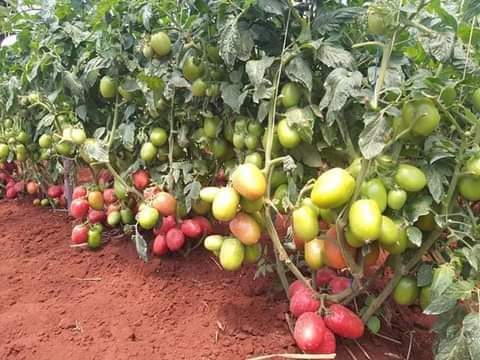
Agricultural stakeholders have emphasized the need for improved infrastructure to curb the significant post-harvest losses affecting tomato production in Nigeria.
Speaking in interviews with the News Agency of Nigeria (NAN) on Tuesday in Lagos, the experts responded to recent remarks by the Minister of Agriculture and Food Security, Mr. Abubakar Kyari, who revealed that Nigeria loses 45% of its 3.9 million tonnes of tomatoes annually due to post-harvest waste and inefficiencies in the supply chain.
“Each year, we produce approximately 3.997 million tonnes of tomatoes. However, around 1.8 million tonnes—about 45 percent—are wasted because of supply chain weaknesses,” Kyari said. Despite being Africa’s leading producer of tomatoes, Nigeria remains the world’s top importer of tomato paste.
Mrs. Temitope Hande, President of She Farmers Initiatives, said infrastructure development is critical to addressing these losses.
“To reduce post-harvest losses, especially in the tomato sector, there needs to be matching investment in infrastructure,” she said. “This includes better road networks, cold-chain logistics, and easier market access for smallholder farmers.”
She also highlighted the need to promote tomato processing to limit waste during periods of surplus. “Processing hubs for tomato paste, powder, or dried products should be established near farming communities. This will help preserve produce and create added value.”
Mr. Ismail Olawale, a specialist in agricultural communication, noted that beyond citing statistics, the government must implement practical solutions.
“While we may not independently verify the minister’s figures, research consistently shows that Nigeria suffers severe post-harvest losses, similar to other developing countries,” he said. “The causes range from inadequate harvesting methods and storage facilities to poor transportation and fragmented markets.”
He added that such losses are not limited to tomatoes but extend to other perishable crops including fruits, grains, tubers, and even cocoa and kola nuts.
“There are already numerous research findings and innovations within our agricultural institutes. Authorities should take stock of these and promote affordable and practical technologies to help farmers reduce losses,” Olawale said.
He stressed the importance of upgrading local markets and storage infrastructure to support safe and timely handling of farm produce, especially in both rural and urban areas.