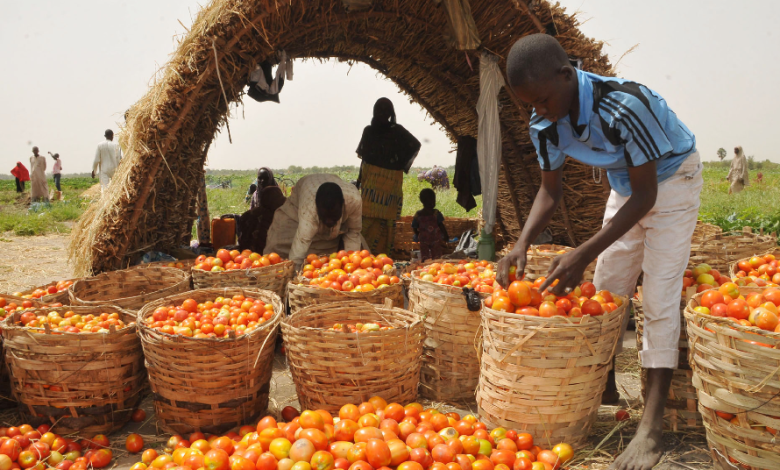
Tomato farmers are raising an alarm once again over the destructive return of Tuta Absoluta—a pest that has haunted their fields for years, often leaving behind empty vines and economic hardship.
In recent weeks, tomato crops across parts of northern Nigeria have come under attack by this tiny but deadly insect, often called the “Tomato Ebola” by farmers because of how quickly it spreads and how devastating its effects are. The outbreak, which began around March, is now beginning to reflect in the markets—where a basket of tomatoes that sold for as low as ₦5,000 just weeks ago now goes for ₦30,000.
“We were in the middle of harvest season when the pest hit,” said Rabiu Zuntu, chairman of the Tomato Growers and Processors Association of Nigeria. “Many farms were completely wiped out. Even the strong ones couldn’t survive the high temperatures and the soil humidity that seemed to trigger the pest’s spread.”
Originally from South America, Tuta Absoluta was first noticed in Nigeria nearly a decade ago, and its presence has been a recurring nightmare for tomato growers ever since. The pest targets the leaves and fruits of tomato plants, and if left unchecked, it can destroy an entire farm in just two days. Female insects can lay up to 300 eggs in their short lifetimes, and in warm climates, they breed rapidly—producing as many as a dozen generations in a single year.
Across the country, tomato growers have come to fear the hot, dry months. This is when Tuta Absoluta thrives, defying pesticides and feeding on crops in stealth.
“This pest isn’t new to us,” said Bola Oyeleke, National President of the Tomatoes and Orchard Processors Association of Nigeria. “But every time it returns, we’re reminded of how unprepared we are. We don’t yet have the system to fight it at scale.”
Although some farmers have begun to experiment with pest-resistant seeds and integrated pest management practices, they say the measures are not foolproof. High soil humidity, poor land preparation, and limited access to proper chemicals continue to undermine efforts to contain the pest.
Oyeleke added that even though tomatoes are still reaching the markets—thanks to harvests already underway—crops planted more recently may not survive if the pest isn’t controlled quickly.
The recurring outbreaks have exposed the vulnerabilities in Nigeria’s tomato production system. Farmers often operate in isolation, without coordinated strategies or support. Some believe that collective land preparation and early pest control could help stop the spread, but such cooperation remains rare.
“We need a change in how we farm,” Zuntu said. “Everyone in a region should begin land preparation at the same time. That way, the pests have fewer places to hide and breed. But until that happens, we’ll keep losing food, money, and time.”
For now, with prices surging and many fields already lost, farmers brace for what could be yet another year of tomato scarcity—and the long shadow of Tuta Absoluta continues to spread.