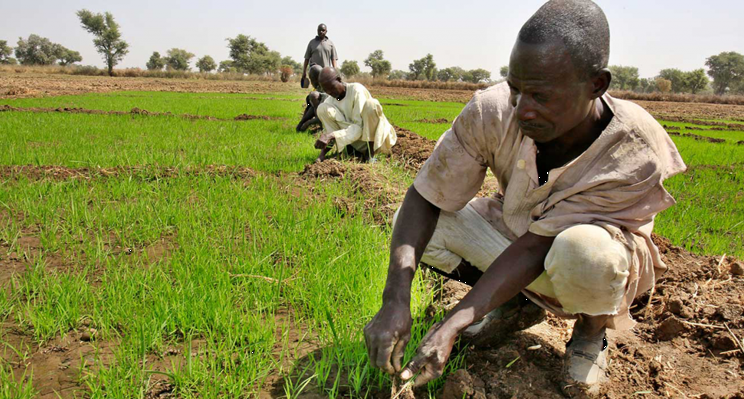
The Federal Ministry of Agriculture and Food Security has committed to reducing post-harvest losses in the agricultural sector by 25% as part of its broader effort to ensure food security and enhance domestic production.
This pledge was made during the Special Agro-Industrial Processing Zones (SAPZ) High-Level Implementation Acceleration Dialogue in Abuja on Monday.
The SAPZ initiative, supported by the African Development Bank, International Fund for Agricultural Development, and Islamic Development Bank, is a Nigerian government programme designed to drive agricultural growth through strategic investments. It aims to integrate farming, processing, and marketing to boost productivity, reduce post-harvest losses, and increase value addition, thereby supporting food security, job creation, and poverty reduction.
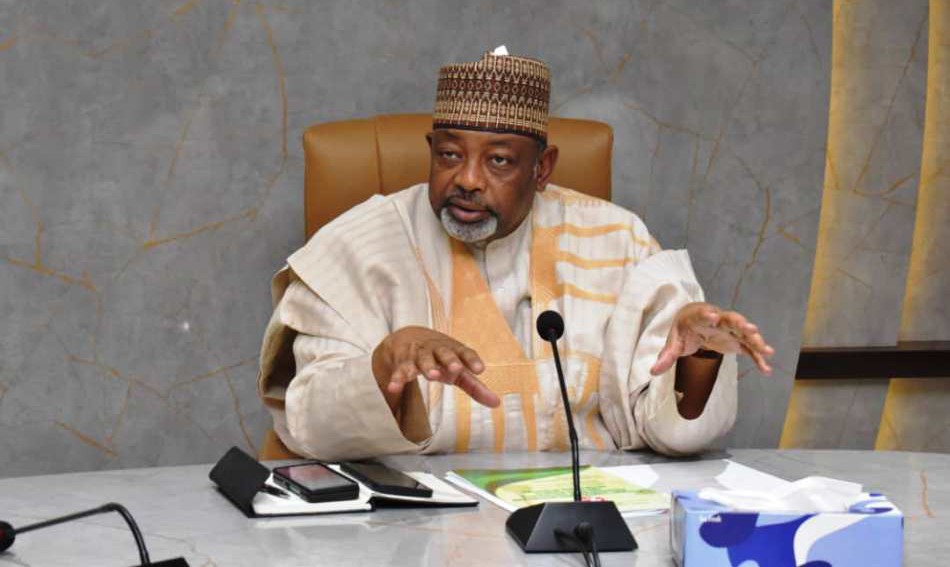
In his keynote address, the Minister of Agriculture and Food Security, Abubakar Kyari, stressed the importance of collaboration in addressing challenges in the agricultural sector.
“Our objective is clear: we must enhance our production capabilities and reduce post-harvest losses from the current 45 per cent to 20 per cent. This is critical not only for food security but also for improving the livelihoods of our farmers,” Kyari said.
He explained that the SAPZ initiative will establish agro-industrial processing zones across seven states and the Federal Capital Territory, with a focus on key crops such as cassava, rice, maize, and cocoa. The programme is expected to generate around 500,000 direct and indirect jobs and increase food supply.
Finance Minister Wale Edun, also speaking at the event, reaffirmed the government’s focus on industrialising the agricultural sector.
“The successful production of food is fundamental to our economic stability. When we achieve our production goals, we will see a significant impact on inflation, interest rates, and ultimately, our trade balance,” he noted.
Edun underscored the importance of collaboration between federal and state governments, alongside private sector partners, for the success of the SAPZ initiative.
“We cannot afford to disrupt domestic production while addressing the immediate food needs of our population. This requires a careful balance of both short-term and long-term strategies,” Edun added.
The Country Director of the African Development Bank, Abdul Kamara, highlighted the transformative potential of the SAPZ programme for Nigeria’s rural economy.
“By reducing post-harvest losses from 50 per cent to 10-20 per cent, we can make a significant contribution to the economy and improve food security,” Kamara said.
He urged stakeholders to work together to overcome the challenges hindering the programme’s implementation.
The workshop, which brought together state governors and representatives from development partners, focused on accelerating the SAPZ programme’s rollout. Dr. Abdulkazumare, representing the Governor of Kaduna State, stressed the need for innovative solutions to overcome current constraints.
“Our goal should be to learn from successful models globally and adapt them to our local context,” he said.
As the dialogue continued, Agriculture Minister Kyari expressed optimism about the SAPZ initiative’s potential to serve as a key driver of Nigeria’s agricultural transformation.
“The path forward requires not just commitment but also effective communication to galvanise public support. Together, we can build a resilient agricultural sector that meets the needs of all Nigerians,” Kyari said.
The Country Director of the International Fund for Agricultural Development (IFAD), Dede Ekoue, commended the initiative, praising the leadership of both the Ministers of Agriculture and Finance.
“We would like to extend our warm congratulations to the Honourable Minister of Agriculture and Food Security for this laudable initiative,” Ekoue stated.
Ekoue also highlighted the ongoing pilot project in Kano State, where IFAD is enhancing the productivity of rice and tomato farmers. He noted that partnerships had already yielded some positive results, including the signing of off-take contracts.
He called for further collaboration to address challenges in implementation and outlined steps to strengthen coordination and technical capacity across the programme.
Regarding Ogun State, Ekoue noted the signing of a subsidiary loan agreement and expressed hope for additional agreements to accelerate the project’s rollout.
“We are convinced that this strategic gathering will empower all stakeholders to accelerate the implementation of SAPZ at these critical times for food security and inclusive economic growth,” he said.