Muhammad Shamsuddeen Abubakar
The United States has intensified its agricultural partnership with Nigeria, supporting initiatives to modernise fish farming and promote American soybean exports in the country.
The development was highlighted at the graduation ceremony of the inaugural Next Gen Leaders for Aquaculture Innovation Programme in Abuja, organised by the US Mission in Nigeria in collaboration with the American Soybean Association’s World Initiative for Soy in Human Health (ASA WISHH) and local agribusiness, SejFarms Consult.
The five-month programme trained ten young Nigerians in modern aquaculture practices, including the use of soy-based feed, aimed at building a resilient and sustainable fish farming sector.
Speaking at the event, Chris Bielecki, the US Mission’s agricultural counsellor, said agriculture remained at the core of the US-Nigeria commercial and investment partnership. He emphasised that the adoption of innovative practices, such as soy inclusion in feed, would contribute to long-term food security and economic stability in Nigeria.
Soymeal has increasingly become a key input in global aquaculture as producers seek cost-effective and scalable protein sources. Nigeria’s fish farming industry, which has expanded rapidly over the past decade, is viewed as a promising market for US soy exports.
During the ceremony, ASA WISHH and SejFarms renewed their three-year collaboration with the signing of a memorandum of understanding (MOU) to enhance fish production capacity and youth participation in aquaculture.
Sejiro Michael Oke-Tojinu, managing director of SejFarms, described the agreement as a platform to expand technical training. He said, “This MOU with the World Initiative for Soy in Human Health demonstrates that we are strengthening our commitment to encourage the growth of Nigerian aquaculture and create new opportunities for young people to be trained in aquaculture, including high-quality feeds.”
US soybean producers, increasingly targeting overseas markets, welcomed the partnership. Jamie Beyer, an ASA director and Minnesota soybean farmer, credited the US Foreign Agricultural Service for leveraging resources to expand US-Nigeria agricultural trade.
Nancy Kavazanjian, a Wisconsin soybean grower and member of ASA WISHH’s trade delegation to Nigeria, described the programme as evidence of soy’s potential to strengthen Nigeria’s fish farming value chain.
Bilateral agricultural trade between the US and Nigeria reached $429 million in 2024, with forecasts suggesting the figure could more than double in 2025.
The momentum is partly driven by Nigeria’s structural food deficit and rising urban demand for affordable protein.
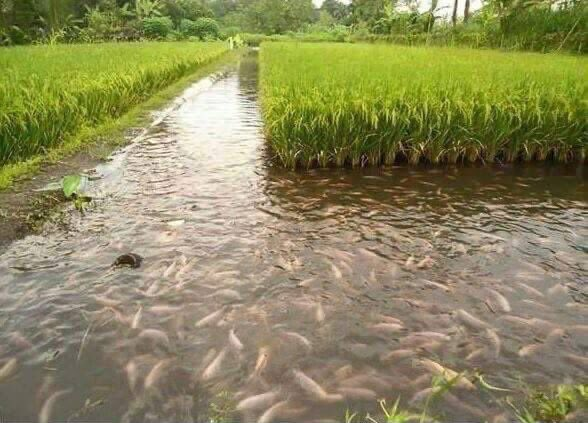
For Nigerian policymakers, aquaculture is becoming a strategic industry. Domestic demand for fish exceeds 3 million tonnes annually, while local production falls below half, forcing reliance on imports. Expanding fish farming capacity and developing inputs such as feed are considered essential for reducing import dependency and creating jobs.
Industry analysts note that partnerships with global suppliers like the US soy sector could accelerate the transition to more intensive fish farming systems, though challenges such as infrastructure gaps, limited access to finance for smallholders, and international feed price volatility persist.
Oke-Tojinu added, “Aquaculture is not only about food, but also about creating livelihoods for Nigeria’s next generation. With the right partnerships, the sector can become a cornerstone of our economy.”