Many years ago, I read the classic book Robinson Crusoe (first published in 1719) by Daniel Defoe. It tells the story of Robinson Kreutznaer, a traveler who spent 28 years stranded on a deserted tropical island near the coasts of Venezuela and Trinidad. During his time on the island, he encountered cannibals, prisoners, and mutineers before being eventually rescued.
It is believed that the story was inspired by the real-life experience of Alexander Selkirk, a Scottish sailor who was marooned on an island in the Pacific Ocean called “Más a Tierra” (now part of Chile). Selkirk survived alone on the island for four years before it was later renamed Robinson Crusoe Island in 1966.
Crusoe had boarded a ship traveling to buy African slaves, but a storm blew the vessel off course, pushing it nearly 40 miles into the sea. Eventually, the ship wrecked on a sandbank near the Venezuelan coast, at the mouth of the Orinoco River, on September 30, 1659. Crusoe named the place the Island of Despair.
After the shipwreck, the crew launched a small boat (jolly boat), but strong waves capsized it, killing everyone except Crusoe. He later determined that the island was located at 9 degrees, 22 minutes north of the equator. On the island, he saw penguins and seals. Apart from himself, only the ship’s dog and two cats survived the wreck.
Despite his loneliness, Crusoe salvaged weapons, tools, and other supplies from the ship before a storm completely destroyed it. He built a shelter with a fence near a cave he dug. By marking a wooden cross, he created a calendar to count the days he spent on the island.
What fascinated me the most was how Crusoe, over the years, used both the tools he salvaged and the ones he crafted himself to start hunting animals, cultivating barley and rice, drying grapes into raisins, making pottery and traps, and rearing goats. He even kept a parrot as a pet.
The biggest lesson I took from this story is how human beings can adapt and survive—even becoming skilled farmers and herders—over many years.
If Crusoe could achieve this alone, how much more can we, living among millions of people, collaborate and invest in farming and livestock to ensure food security?
People are a great resource, but only if properly managed. In this country today, I have met experts who have shared their journeys of how they started farming and reached great heights. These are success stories filled with valuable lessons that I will continue to share for the benefit of all.
But first, let me tell you how I started my own farming journey: how I struggled, doubted, adapted, failed, and finally succeeded.
Starting with My Own Story: How I Took the Leap into Farming
I have come to realize that the wealth Allah has hidden within nature is a blessing meant for His servants in this world. However, each person is left to take according to their effort and utilize it based on their vision and wisdom.
In the past, we lived comfortably with the little that farmers cultivated, and it was enough for us. Back then, there was no uncontrollable inflation like we experience today.
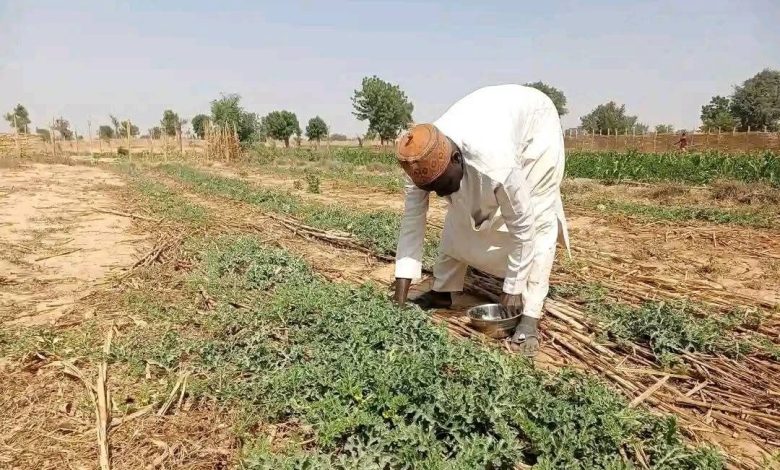
Life has become expensive in Nigeria, and people are complaining. Ironically, while modern technology has made farming easier, we seem to be sinking deeper into economic hardship. *Kaicho!* It was the story of Crusoe that awakened something in me, pushing me to take the bold step of starting my own maize farm.
At first, I hesitated. I had no formal farming experience, no mentor, and no assurance that my investment wouldn’t go to waste. But then, I realized something: no one ever truly feels “ready” to start something new. If I waited for the perfect moment, I would never begin.
With just a one-hectare plot, I invested ₦350,000, covering land rent, seeds, fertilizers, pesticides, and labor costs. I remember standing on the land that first day, looking at the empty soil and wondering, Will this really work?
The challenges came almost immediately. There were unexpected costs—laborers charged more than I had budgeted, pests threatened to destroy my crops, and thieves targeted my farm at night. There were times when I felt like giving up, thinking, Maybe farming isn’t for me after all.
But I kept going. I learned to solve problems on the go. I started networking with experienced farmers, asking questions, and observing their techniques. I read about soil fertility, pest control, and the best planting seasons.
Despite all the setbacks, I was able to harvest 19 bags of maize. At the time, the total value of my yield was approximately ₦1,045,000, which was a great start for a small-scale farmer like me.
Jira-jira-jira, I didn’t stop there. On the side, I also planted white beans, which yielded 1½ bags, fetching me over ₦100,000. This alone was enough capital for me to reinvest in the next farming season.
That first harvest—uhmm!—was more than just financial gain. It was a lesson in perseverance, adaptability, and the power of starting small. It showed me that farming, like any other business, is about learning, failing, adjusting, and growing.
To cut it short, if I could achieve this with zero prior farming experience, imagine what others can do with access to knowledge, resources, and community support.
Farming isn’t just for those who inherited land or grew up in agricultural families. It’s for anyone willing to learn, experiment, and push through challenges.
This is why I will continue to share success stories—not just mine, but those of other farmers who have started from nothing and built something remarkable.
Whether you are an aspiring farmer, an investor, or someone simply looking for a way out of economic struggles, I hope these stories will inspire you to take action.
Like Crusoe on his island, sometimes survival means taking control of your resources, adapting, and making the most of what you have.
Mujahid Ibrahim wrote this piece from Bauchi – Nigeria