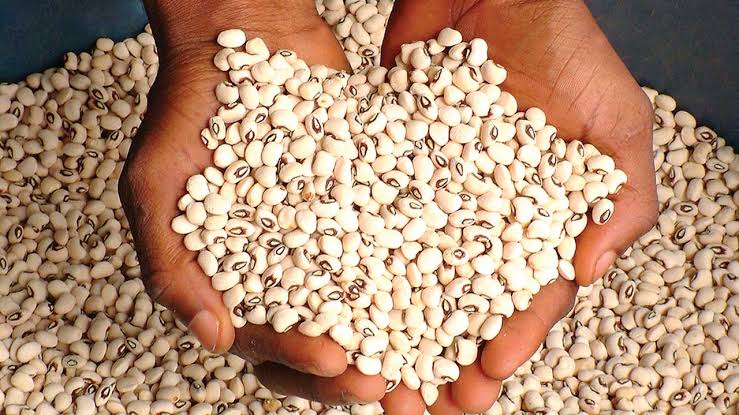
Nigeria, once the world’s leading producer of beans, now struggles to meet its demand due to security challenges, poor storage facilities, and trade restrictions.
Previously responsible for around 58 percent of the global beans output, the country’s production has decreased, affecting local markets and consumers.
Beans production in Nigeria has been impacted by banditry, farmer-herder conflicts, climate change, and ineffective storage practices, which have reduced the crop’s quality and availability.
Alhaji Abdulrasheed Magaji Rimin Gado, Chairman of the Kano chapter of the All Farmers Association of Nigeria (AFAN), expressed concern over the decline in beans production.
He attributed this to insecurity across Northern Nigeria, where most of the crop is grown. “The reduction in bean production is due to insecurity in the beans-producing areas in the North,” he said.
The demand for beans remains unmet partly due to trade restrictions imposed by the neighboring Republic of Niger, a significant regional supplier.
Rimin Gado disclosed that Niger Republic supplies about 45 percent of the beans consumed in Northern Nigerian states. However, with a weakening Naira and an unfavorable exchange rate to the CFA Franc, Nigerian merchants are finding it difficult to import beans from Niger.
The situation worsened when Niger banned exports of agricultural goods, including beans, to protect its domestic food supply.
“These developments may not allow the price of beans and other agricultural commodities to go down,” Rimin Gado said. “There is also a need to introduce dry-season beans production to supplement the wet-season production. An intervention from the government to introduce a price control mechanism could help regulate beans availability and affordability.”
At Dawanau International Grain Market in Kano, beans merchant Alhaji Musa Gawuna observed that despite a rise in demand, local production remains limited. Many farmers leave their fields early out of fear of conflict with herders, resulting in lower cultivation and harvest levels.
“Farmers leave the farm early due to fear of farmer-herder conflict, and as such didn’t cultivate beans as expected,” he explained.
The supply constraints have been intensified by Niger’s recent decision to restrict food exports to countries outside of the Alliance of Sahel States (ASS), a coalition formed by Mali, Niger, and Burkina Faso in 2023.
The ASS pact followed a military coup in Niger, leading to strained relations with the Economic Community of West African States (ECOWAS). The banned products include staples like rice, millet, sorghum, and cowpea, a crucial legume in the Nigerian diet.
A recent survey by Farmers Voice NG reveals that the price of beans in Kano’s market has significantly increased. A mudu of white beans now costs N3,500, while red beans range from N3,800 to N4,000, compared to N1,200 for the same quantities last year. Additionally, the price of a full bag of beans has risen to N115,000, up from N75,000 in December.
As inflation escalates and food prices rise, Nigerian consumers are facing a tougher challenge in accessing affordable beans.
Economists and food experts have urged the Nigerian government to implement strategies that promote food security, including price controls and incentives for local farmers to pursue dry-season farming.