The Bauchi State Budget Committee Group (BCG) has raised concerns over the inadequate funding allocated to the agricultural sector in the proposed 2025 state budget.
The Chairperson of the committee, Mrs. Tabawa Atiku, made this known during a news conference held on Monday in Bauchi.
The event was organized in collaboration with Fahimta Women and Youth Development Initiative (FAWOYDI), the Smallholder Women Farmers Network (SHOWFAN), the Small Scale Women Farmers Organisation in Nigeria (SWOFON), and ActionAid Nigeria.
Atiku said the committee’s analysis of the 2025 budget revealed that only 1.6 percent of the N465.9 billion budget was allocated to agriculture in the state.
She pointed out that this figure falls far below the 10 percent benchmark set by the 2014 Malabo Declaration, to which Nigeria is a signatory.
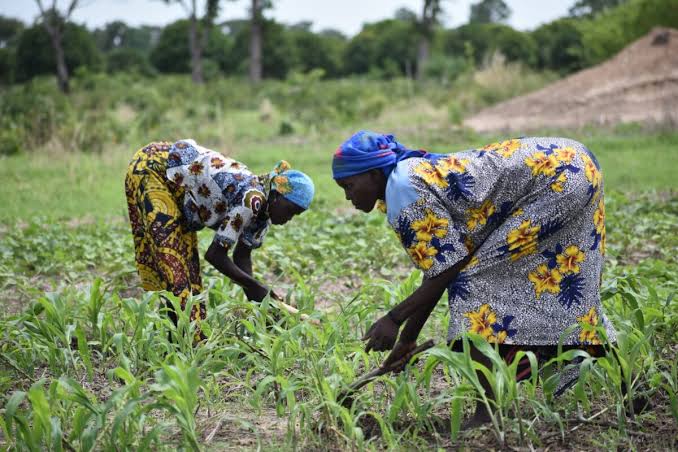
“With just N7.64 billion allocated to agriculture, stakeholders argue that this shortfall undermines efforts to address food insecurity, poverty, and malnutrition—particularly among smallholder women farmers who produce over 60 percent of the state’s food,” she said.
Atiku added that women farmers face multiple challenges, including limited access to credit, rising input costs, lack of storage and processing facilities, and high post-harvest losses due to poor infrastructure and inadequate support.
“Flooding and the rising cost of inputs like fertilisers and seeds have worsened their situation. Many still rely on outdated tools such as hoes and animal-drawn implements, which significantly reduce productivity,” she added.
Also speaking at the conference, Mrs. Dinah Daniel, Executive Director of FAWOYDI, noted that the budget analysis showed that only 18 percent of women farmers have access to processing facilities.
She called on the state government to create a dedicated budget line for smallholder women farmers to improve their access to extension services, credit, and post-harvest infrastructure.
Daniel also urged the government to allocate at least 10 percent of the state budget to agriculture and invest in irrigation and climate-resilient farming methods to reduce the impact of climate change.
“Without significant investment in women-led agriculture and rural infrastructure, the food crisis in Bauchi may worsen,” she warned.